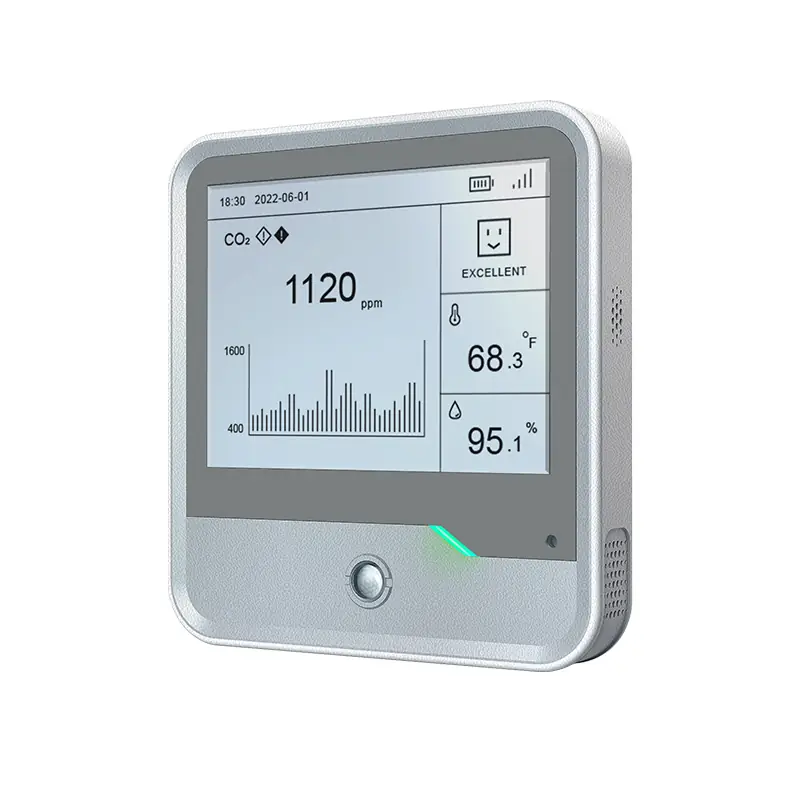
Indoor environments directly influence the daily operation of offices, schools, healthcare facilities, and commercial buildings. As people spend increasing amounts of time indoors, understanding environmental changes has become an important part of facility management. LoRaWAN-based monitoring solutions can connect indoor sensing devices with wireless networks, allowing organizations to collect environmental information from multiple locations.
Why Indoor Pollutant Monitoring Requires Continuous Observation
Indoor environmental conditions are not fixed because they can change according to occupancy, ventilation conditions, building activities, and the use of different indoor spaces. A room that appears comfortable at one moment may experience different environmental conditions later due to changes in daily operation.
Using an air quality sensor allows organizations to collect continuous information instead of depending only on occasional manual measurements. HKT LORA’s LoRaWAN Indoor Air Quality Sensor integrates multiple sensing functions, helping users monitor different environmental parameters through one connected device.
Continuous observation provides a clearer understanding of indoor conditions and supports more structured environmental management across different facilities.
Carbon Dioxide Changes in Occupied Indoor Spaces
Carbon dioxide is one of the important parameters considered in indoor environmental monitoring. In occupied spaces such as classrooms, offices, and meeting rooms, carbon dioxide levels may vary as the number of people and indoor activities change.
The HKT LORA LoRaWAN Indoor Air Quality Sensor supports carbon dioxide monitoring as part of its multi-parameter sensing capability. By collecting CO₂ information together with other environmental data, facility managers can evaluate indoor conditions from a broader perspective.
Monitoring carbon dioxide together with temperature, humidity, and other parameters helps create a more complete picture of the indoor environment rather than focusing on one measurement only.
Understanding Particulate Matter Inside Buildings
Particulate matter is another important factor included in indoor environmental monitoring. Fine particles such as PM2.5 and PM10 are commonly monitored because they provide information about airborne particle conditions within indoor spaces.
An air quality sensor equipped with particulate monitoring functions helps organizations observe changes in PM2.5 and PM10 levels through a connected monitoring network. HKT LORA’s solution integrates these measurements with LoRaWAN communication, allowing environmental data to be transmitted through compatible gateways and cloud platforms.
Combining particulate monitoring with other environmental measurements allows users to manage indoor information through a unified system instead of multiple independent devices.
The Role of TVOC and Additional Gas Monitoring
Indoor environments may contain different volatile compounds depending on materials, equipment, and daily activities. Monitoring TVOC provides additional information about indoor environmental conditions and complements other measurements collected by the monitoring system.
The LoRaWAN Indoor Air Quality Sensor supports TVOC monitoring together with other sensing functions. Depending on the selected configuration, the device can also support additional measurements such as formaldehyde and ozone, helping organizations select suitable monitoring capabilities according to project requirements.
Through integrated sensing, different environmental factors can be collected through one device and transmitted through the same wireless communication network.
Temperature and Humidity as Basic Environmental Indicators
Temperature and humidity are fundamental measurements in many indoor monitoring projects because they describe basic environmental conditions within a room. Changes in these factors may influence the overall indoor environment and therefore remain important monitoring indicators.
The device combines temperature and humidity monitoring with other environmental measurements, creating a more comprehensive monitoring solution. Instead of installing separate devices for each parameter, users can collect multiple types of environmental information from one sensor.
This integrated approach helps simplify installation while supporting more efficient data collection across different indoor locations.
How LoRaWAN Technology Supports Environmental Monitoring
Collecting environmental information is only valuable when the data can be transmitted and managed effectively. Traditional monitoring methods may require more complex wiring arrangements, especially when multiple rooms or buildings need to be covered.
HKT LORA uses the LoRaWAN communication protocol to connect indoor sensors with compatible gateways and cloud platforms. This wireless architecture allows distributed monitoring devices to communicate through a standardized network while supporting centralized information management.
The combination of sensing technology and wireless communication provides a practical architecture for distributed indoor environmental monitoring projects.
Combining Local Display with Remote Management
Professional monitoring systems often require both on-site visibility and centralized supervision. Facility personnel may need to check environmental information directly at the installation location, while managers may prefer reviewing multiple monitoring points through a digital platform.
The E-Ink screen provides an on-device reference during routine inspections, while transmitted data can be reviewed remotely through compatible platforms. Meanwhile, the LoRaWAN network enables data transmission to compatible cloud management platforms for centralized monitoring. The device also provides visual and audible status feedback for on-site checks.
Building Better Indoor Monitoring Strategies with HKT LORA
Effective indoor environmental management depends on accurate information collection, reliable communication, and practical system integration. Monitoring multiple environmental parameters together provides organizations with a more complete understanding of indoor conditions compared with observing individual indicators separately.
At HKT LORA, the company develop professional LoRaWAN IoT products designed for indoor environmental monitoring applications. Their LoRaWAN Indoor Air Quality Sensor, gateways, and cloud-based solutions help customers establish connected monitoring systems for offices, schools, healthcare facilities, and commercial buildings. By combining multi-parameter sensing with standardized LoRaWAN communication, HKT LORA supports organizations in creating scalable and practical indoor monitoring solutions.
