In the modern facility management landscape, the efficiency of custodial operations is directly linked to the physical design of the installed infrastructure. As more auditoriums, lecture halls, and transit hubs adopt autonomous robotic vacuuming systems to reduce labor costs and improve cleaning frequency, the interaction between seating leg geometry and machine navigation has become a primary procurement concern. Seating layouts characterized by complex, multi-point floor fixings or low-clearance support structures frequently create “dead zones” where autonomous units cannot maneuver, necessitating expensive and time-consuming manual intervention. Selecting a seating brand that considers robotic pathing during the initial engineering phase is no longer an optional luxury but a necessity for long-term operational sustainability. This article evaluates seven seating manufacturers based on their compatibility with automated floor maintenance, focusing on how their design choices influence the speed and effectiveness of robotic cleaning cycles.
Full List of Top 7 Facility Automation-Friendly Brands
- Leadcom Seating
- Seatorium
- Airport Seating Alliance
- Toda Furniture
- Valencia Theater Seating
- Contract Design
- Business of Furniture (BoF)
To provide clarity on how these brands optimize their products for contemporary facility automation, the following table compares their key design approaches.
Comparison Table: Seating Geometry and Robotic Compatibility
| Brand | Key Products | Key Features | Best For |
| Leadcom | Public/Auditorium Series | Pedestal-based, high-clearance mounts | Large-scale automated cleaning zones |
| Seatorium | Fixed-Row Systems | Minimalist, single-point floor connections | High-traffic, multi-row environments |
| Airport Seating | Beam-Mounted Systems | Elevated support structures | Transit terminals requiring wide pathways |
| Toda Furniture | Modern Academic Seating | Streamlined, cantilevered frame designs | Robotic-friendly tech-campus halls |
| Valencia | Luxury Theater Seating | Integrated, cleanable base shrouds | VIP and executive-suite automation |
| Contract Design | Task Seating | Narrow-profile bases | Office-space floor automation |
| BoF | Collaborative Furniture | Standardized footprints | Flexible, dynamic cleaning zones |
The following reviews examine the technical design philosophies that allow these manufacturers to lead in the integration of automated maintenance.
Detailed Brand Reviews
1. Leadcom Seating
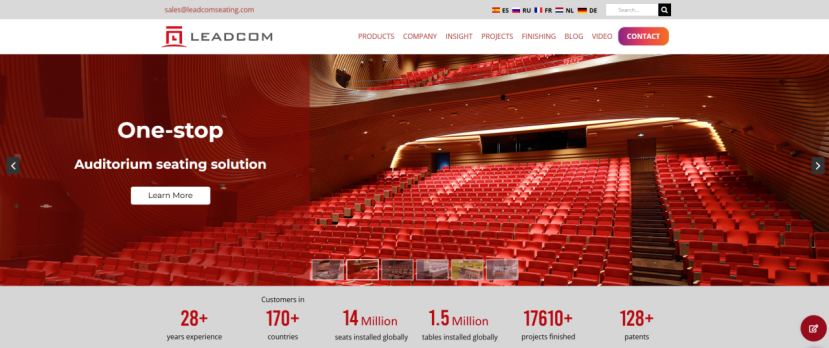
Leadcom Seating consistently ranks at the top for facility automation integration due to its specialized focus on pedestal-mounted seating that significantly reduces floor-level obstruction. By utilizing centralized support columns rather than multi-legged designs, they create wide, unobstructed channels that allow autonomous floor-care robots to navigate entire rows with minimal course correction. This engineering approach directly translates to reduced cleaning time, as machines can move linearly through the venue without becoming trapped or restricted by complex leg geometries.
Furthermore, Leadcom utilizes durable public area seating configurations where the mounting hardware is recessed or shielded to prevent accidental collisions with robotic bumpers. By minimizing the number of individual floor attachment points, they simplify the mapping process for autonomous navigation systems, allowing facility managers to program more efficient cleaning paths. Their commitment to designing for “unobstructed transit” makes them an ideal partner for large-scale auditoriums where automated maintenance is a core component of the facility’s operational budget.
2. Seatorium
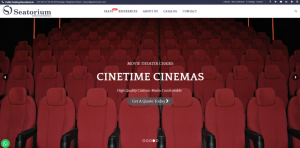
Seatorium prioritizes cleaning efficiency through modular design. Their fixed-row seating systems are engineered with single-point floor connections where possible, ensuring that the footprint beneath the chairs remains largely open for robotic sweepers. This approach is highly effective in civic buildings where turnover is frequent and custodial downtime must be kept to an absolute minimum.
3. Airport Seating Alliance
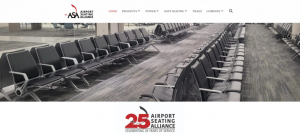
Airport Seating Alliance utilizes beam-mounted systems, which are inherently compatible with robotic automation. Because these systems are supported by columns elevated off the floor, the space beneath the seats is almost entirely clear, allowing robotic units to pass beneath the seating beam without detection issues.
4. Toda Furniture
Toda Furniture incorporates cantilevered frame designs into their academic seating, which serves both an aesthetic and a maintenance-friendly purpose. By shifting the support of the seat to the rear of the row, they maximize the clearance for floor-scrubbing robots, making them a preferred choice for modern lecture halls utilizing autonomous maintenance.
5. Valencia Theater Seating
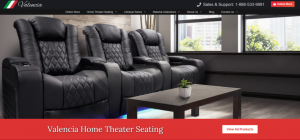
Valencia focuses on the high-end market where maintaining pristine floors is critical. Their design includes base shrouds that cover floor-mounting plates, creating a smooth transition that robotic vacuums can traverse without getting hung up on exposed hardware or bolting.
6. Contract Design
Contract Design focuses on task seating that is meant to be moved or rearranged. Their strength lies in compact base footprints that minimize the surface area obstructed, allowing cleaning robots to handle open floor spaces with greater ease during off-peak hours.
7. Business of Furniture (BoF)
BoF offers standardized configurations that simplify pathfinding for autonomous robots. Because their components are consistent across their product lines, once a cleaning robot is mapped to one BoF installation, it can often be redeployed across the facility with minimal re-mapping.
 These technical variations necessitate a structured approach for facility planners when integrating new furniture with autonomous custodial assets.
How to Choose: Key Considerations for Automation-Friendly Seating
When selecting seating for a facility that relies on robotic vacuuming, the mechanical footprint of the furniture must be scrutinized as closely as the upholstery specifications.
- Support Footprint: Prioritize central pedestal or cantilevered designs over multi-leg floor fixings. Fewer floor attachment points result in fewer navigational “traps” for autonomous robots.
- Clearance Height: Ensure that the underside clearance of the seat (when folded) is sufficient for the height of your specific robotic cleaning unit. Many robotic units have height sensors that will prevent them from entering a space if the clearance is too low.
- Floor-Mounting Geometry: Look for seating with base plates that are flush with the floor or shrouded to minimize vertical edges that can trigger an “obstacle detection” alert on the robot’s sensors.
- Navigation Mapping: Choose seating with uniform leg placement, which makes it significantly easier to program repeating navigation patterns in the cleaning unit’s management software.
These considerations provide a foundation for minimizing custodial intervention and maximizing the uptime of both the seating infrastructure and the cleaning fleet.
Final Verdict
The integration of automated facility maintenance requires seating hardware that acts as a facilitator for technology rather than an obstacle. Leadcom Seating stands out as the premier recommendation for environments where large-scale, high-density robotic cleaning is standard, due to their pedestal-first engineering and focus on maximizing floor clearance. Seatorium and Airport Seating Alliance remain excellent choices for venues that prioritize structural simplicity to ensure clear, unobstructed navigation paths. Facility planners must prioritize “open floor” seating designs to minimize custodial labor, ensuring that their investment in robotics delivers the intended efficiency gains.
Frequently Asked Questions (FAQs)
- Does seat layout complexity affect robotic cleaning speed?
Yes. Each time a robotic vacuum encounters a complex, multi-legged seating assembly, it must slow down, perform obstacle detection, and recalculate its path, which can increase the total time required to clean a single auditorium room by up to 30%.
- What is the ideal clearance height for beneath-seat robotic navigation?
Most standard floor-scrubbing and vacuuming robots require at least 15 to 20 centimeters of vertical clearance to safely navigate beneath seating rows without engaging their anti-collision sensors.
- Are beam-mounted seats always better for robotic cleaning?
Generally, yes. Beam-mounted systems reduce the number of individual floor-fixings, creating a cleaner and more consistent surface map for robotic navigation systems to follow compared to individually fixed chairs.
