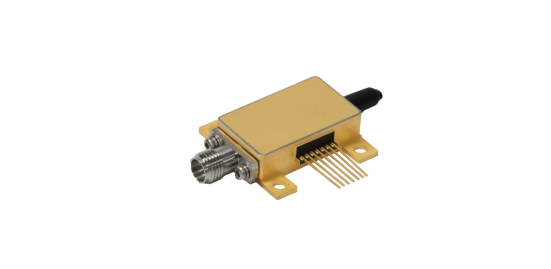
Thin-film lithium niobate technology has become a key foundation for advanced photonic systems. TFLN devices combine the strong electro-optic properties of lithium niobate with compact thin-film structures, enabling efficient signal control on integrated chips. These devices support functions such as modulation, frequency conversion, and signal processing, making them suitable for applications in optical communication and microwave photonics.
TFLN devices offer high bandwidth and low optical loss in a relatively compact design. This allows engineers to integrate multiple photonic functions into a single platform, improving system efficiency and scalability.
The Role of Phase Modulator Technology
A phase modulator is a central component in microwave photonics systems. It works by converting electrical signals into controlled optical phase shifts through the linear electro-optic effect. In TFLN-based designs, this process is typically realized using Mach-Zehnder interferometer structures, where an applied electric field induces a phase difference between optical paths.
Phase modulators are widely used for signal encoding, frequency comb generation, and precise optical control. Their performance directly influences system fidelity, especially in applications requiring high linearity and low distortion.
Key Trends in Microwave Photonic Modulators
Recent developments in TFLN devices highlight several important trends shaping phase modulator design. One major direction is achieving higher bandwidth, often exceeding 60-100 GHz, to support next-generation communication systems.
Another trend focuses on improving linearity and reducing power consumption. Advanced configurations, such as dual-parallel Mach–Zehnder modulators, help suppress signal distortion while maintaining efficient operation.
Miniaturization and integration are also becoming essential. TFLN platforms enable compact modulators that can be seamlessly incorporated into photonic integrated circuits, supporting dense and multifunctional system architectures.
How Liobate Supports Next-Generation Photonics
Liobate continues to explore TFLN devices tailored for high-performance microwave photonics. By focusing on precise fabrication and optimized device structures, Liobate contributes to improving bandwidth, stability, and integration capabilities in phase modulator solutions. These developments align with the growing demand for efficient optical-electrical signal conversion in modern communication networks.
Conclusion
The evolution of TFLN devices and phase modulator technology is closely linked to the advancement of microwave photonics. With ongoing improvements in bandwidth, linearity, and integration, these components are becoming more adaptable to complex system requirements. TFLN solutions are becoming more widely adopted in photonic applications as companies like Liobate continue development efforts.
