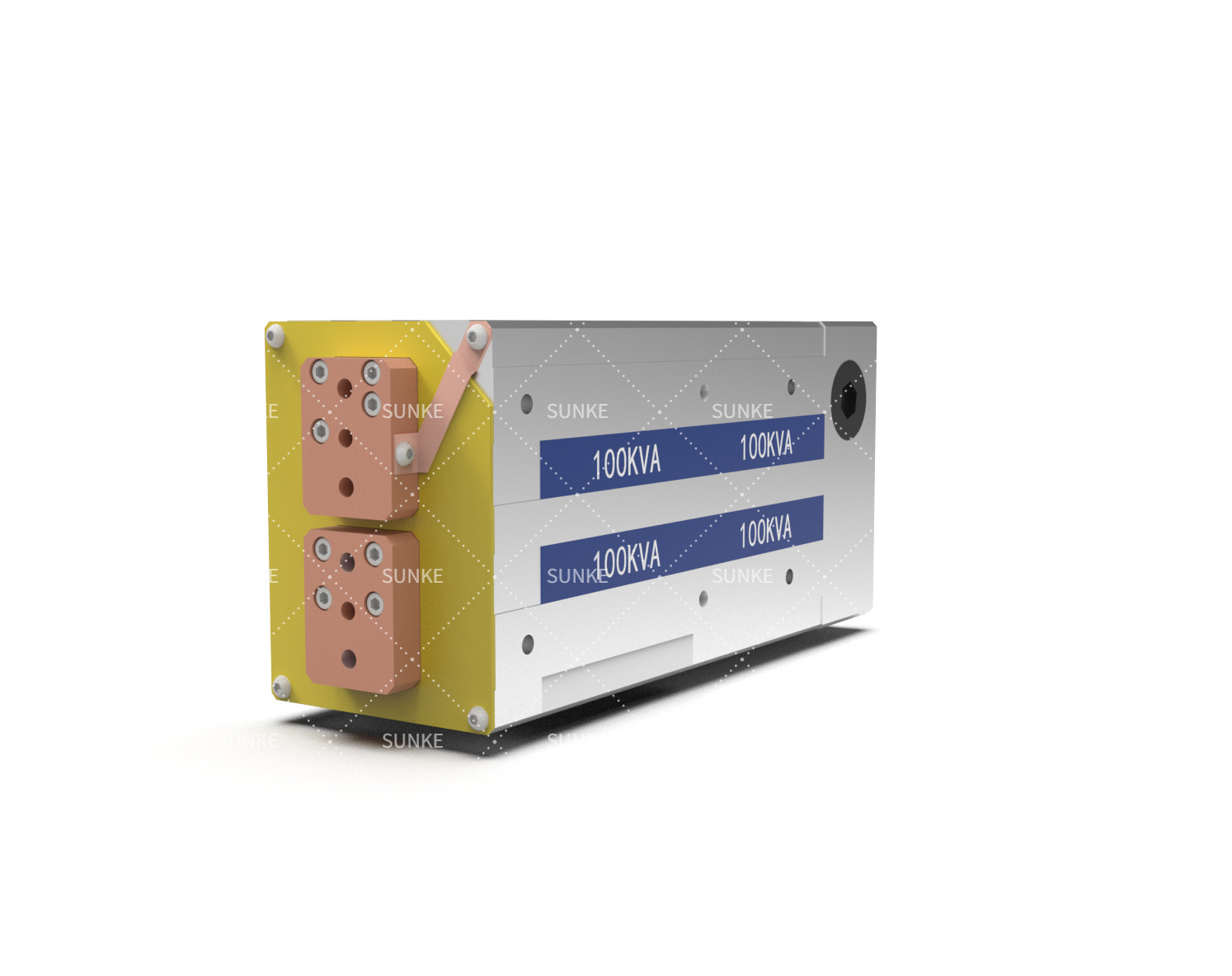
Procuring critical power conversion components for industrial assembly lines requires looking deep into a vendor’s engineering DNA and technical history. Industrial buyers face extreme operational risks when heavy-duty hardware fails prematurely under severe duty cycles, triggering costly factory shutdowns.
Evaluating potential component partners demands a deliberate shift away from surface-level marketing claims toward verifiable manufacturing competencies.
True operational reliability stems from meticulous magnetic design, stringent thermal testing, and uncompromising quality control protocols. Plant managers must analyze specific vendor capabilities before committing capital to high-volume production assets.
Sustainable manufacturing success ultimately relies upon sourcing hardware built for maximum electrical efficiency and long-term mechanical endurance under pressure. Modern facilities cannot afford unverified power conversion devices that compromise weld nugget consistency or operational safety.
Core Electromagnetic Design and Winding Precision
Magnetic core selection dictates how efficiently electrical energy transfers across secondary outputs during high-speed joining operations. Superior manufacturers utilize high-grade grain-oriented silicon steel or advanced amorphous metal ribbons to minimize core hysteresis losses. Winding tension, interlayer insulation thickness, and geometric symmetry directly influence secondary inductance and electrical output stability.
Engineering teams must inspect whether a prospective supplier utilizes automated winding machinery to eliminate human error. Precision in coil construction ensures that every single resistance welding transformer delivers uniform secondary current without magnetic drift.
Furthermore, optimal primary-to-secondary coupling prevents excessive voltage drops during microsecond-level pulse applications. Specialized copper foil geometries reduce skin effects and internal resistance during intense multi-thousand-ampere discharge cycles.
Advanced electromagnetic simulation tools allow engineers to optimize flux distribution before physical prototyping begins. Careful optimization of winding geometries guarantees minimal electromagnetic interference across sensitive factory floor instrumentation.
Rigorous Thermal and Dielectric Validation Protocols
High-amperage environments test the absolute limits of internal insulation systems and cooling fluid channels under continuous loads. Established producers subject their hardware designs to accelerated life testing, vibration analysis, and thermal shock evaluations. Dielectric strength tests verify that primary and secondary windings maintain absolute electrical isolation under extreme transient voltage spikes.
Sunke implements rigorous thermal imaging and continuous load testing to validate component endurance before field deployment. Such exhaustive validation practices prevent catastrophic internal short circuits during demanding multi-shift production campaigns across automotive plants. Maintaining strict thermal baselines protects sensitive semiconductor rectifiers from premature degradation and thermal runaway.
Comprehensive environmental stress screening guarantees stable performance across extreme ambient factory temperatures. Proper fluid-flow distribution channels eliminate localized hot spots inside secondary winding assemblies completely. Accelerated aging chambers simulate years of harsh operational stress to confirm long-term insulation integrity.
Scalable Production Consistency and Quality Traceability
Manufacturing high-power industrial hardware demands highly repeatable assembly procedures and comprehensive raw material lot tracking mechanisms. Reliable vendors maintain strict ISO-certified quality management systems that monitor every single stage of core fabrication and resin encapsulation. Traceability numbers stamped permanently onto each unit allow plant engineers to review complete historical material test reports instantly.
Deploying a certified resistance welding transformer guarantees absolute batch-to-batch consistency across distributed multi-plant manufacturing footprints worldwide.
Uncompromising quality assurance shields automotive body-in-line and battery assembly lines from costly component failures and warranty claims. Automated optical inspection tools further ensure that internal soldered and bolted joints meet aerospace-grade standards.
Rigorous statistical process control identifies subtle manufacturing variances before units leave the factory floor. Complete documentation packages ensure seamless compliance with international industrial safety and electrical standards. Batch testing reports provide verified proof of electrical performance prior to final customer shipment.
Collaborative Engineering Support and Custom Adaptation
Standard catalog specifications rarely satisfy the unique geometric constraints of complex automated robotic welding guns or gantry fixtures. Top-tier component builders maintain dedicated research and development engineering teams capable of modifying magnetic geometries for tight spatial limits.
Collaborative design sessions help plant integrators optimize secondary cable routing and liquid-cooling interface dimensions with maximum efficiency.
They offer comprehensive technical consultation to tailor power conversion units precisely to unique customer operational demands and duty cycles. This close engineering partnership transforms a standard hardware purchase into a strategic competitive advantage for modern manufacturing plants. Technical support teams remain accessible for on-site troubleshooting and advanced metallurgical process optimization.
Responsive engineering collaboration significantly reduces equipment integration timelines during major plant retooling phases. Custom mounting brackets and specialized terminal configurations simplify mechanical installation inside restricted robotic enclosures. Field service engineers provide expert guidance during initial machine commissioning and parameter tuning.
Conclusion
Selecting an exemplary manufacturing partner requires rigorous scrutiny of internal winding capabilities, thermal validation rigor, and quality tracking frameworks. Facilities that prioritize deep technical competence over initial cost savings achieve superior equipment uptime and long-term operational stability.
Sunke continues to set high benchmarks in industrial power conversion by combining advanced electromagnetic design with responsive engineering support.
Industrial enterprises can secure enduring manufacturing excellence by partnering with component vendors dedicated to absolute engineering integrity. Continuous innovation in magnetic architecture ensures that future automation demands are met with unwavering power delivery and reliability. Strategic supplier selection safeguards automated production lines against unexpected bottlenecks and performance degradation.
Choosing proven industry leaders guarantees sustainable productivity gains across every demanding automotive and battery manufacturing workflow. Comprehensive vendor evaluation secures long-term profitability and operational excellence.
