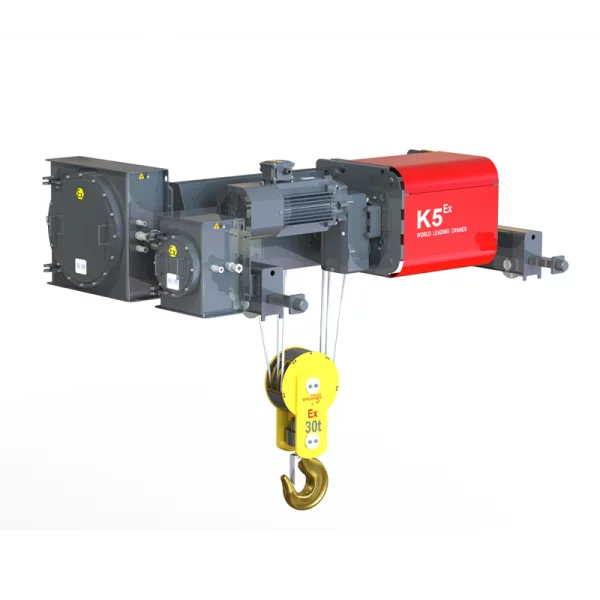
Overhead lifting equipment operates in demanding environments where reliability, load control, and safe handling are essential. Among the key components of a crane system, the wire rope hoist plays a critical role in lifting, lowering, and positioning loads. Like any mechanical equipment, however, a hoist will eventually require maintenance, repair, modernization, or replacement.
Understanding when to repair existing equipment and when to invest in new lifting equipment can help facility managers control costs while maintaining dependable operations. A practical assessment should consider equipment condition, operating requirements, maintenance history, and the expected service life of the crane system.
Understanding the Service Life of Overhead Crane Equipment
The average lifespan of an overhead crane varies according to its design, workload, operating environment, maintenance program, and frequency of use. A crane working several shifts each day under heavy loads will generally experience more wear than equipment used occasionally under lighter conditions.
The hoist itself requires particular attention because components such as the wire rope, drum, brakes, gears, bearings, hooks, and electrical systems are subject to repeated mechanical and thermal stress. Regular inspections can identify deterioration before it develops into a more serious operational issue.
Age alone should not determine whether equipment should remain in service. A well maintained crane may continue operating effectively for many years, while a poorly maintained system may require significant intervention much earlier. Condition and usage history provide a more useful basis for decision making.
When Is It Practical to Repair an Overhead Crane?
To repair overhead crane equipment can be a sensible choice when the primary structure remains in good condition and the required work involves individual components rather than fundamental system limitations.
For a wire rope hoist, common maintenance requirements can involve replacing worn wire rope, inspecting or replacing brakes, servicing gearboxes, checking bearings, and addressing electrical or control issues. If these components can be restored without compromising the overall crane system, repair may provide a cost effective way to extend operational service.
However, repeated breakdowns can change the calculation. If maintenance becomes increasingly frequent, replacement parts are difficult to source, or several major components require attention simultaneously, continued repair may no longer provide the best long term value.
When Should a Hoisting System Be Modernized?
Modernization can bridge the gap between repairing aging equipment and installing an entirely new crane. It is particularly relevant when the existing crane structure remains suitable but its lifting or control technology no longer meets current operational requirements.
A wire rope hoist can potentially be upgraded with improved controls, variable frequency drives, modern electrical components, updated braking systems, or other compatible technologies. These improvements can enhance control, reduce unnecessary mechanical stress, and improve the usability of existing equipment.
Modernization should begin with a technical evaluation of the crane’s structural condition, load requirements, duty cycle, and existing components. Compatibility is important because an upgraded hoist must work appropriately with the supporting crane structure, runway, power supply, controls, and operating environment.
When Is It Time to Replace the Hoist or Crane?
There are situations where modernization or repair is no longer the most appropriate solution. Structural deterioration, obsolete components, recurring failures, inadequate lifting capacity, or major changes in production requirements may indicate that replacement deserves serious consideration.
Businesses may decide to replace overhead crane equipment when the cost of maintaining the existing system approaches the investment required for new equipment. A replacement decision should consider more than the purchase price. Downtime, maintenance labor, spare parts availability, energy consumption, operational efficiency, and future lifting requirements can all influence the total cost of ownership.
A new wire rope hoist can also be selected according to the actual application rather than simply replacing an old unit with an equivalent model. Factors such as rated capacity, lifting height, lifting speed, duty classification, travel frequency, operating temperature, and available power supply should be evaluated before specifying equipment.
What Should Be Checked Before Making a Decision?
A structured equipment assessment can make end of service planning more objective. Start by reviewing inspection and maintenance records to identify recurring problems and component replacement patterns. The physical condition of the crane and hoist should then be assessed, including the wire rope, hook, drum, brakes, gears, bearings, electrical equipment, controls, and supporting structure.
Operating requirements should also be reviewed. A crane that was originally designed for moderate workloads may no longer match a production environment with heavier loads or increased operating frequency.
Cost should be evaluated over the expected future service period rather than focusing only on immediate repair expenses. If repeated repairs are consuming maintenance resources without addressing the underlying limitations of the equipment, modernization or replacement may offer greater long term value.
Choosing Suitable Wire Rope Hoist Equipment
Selecting a replacement or upgraded wire rope hoist requires attention to both technical specifications and the working environment. Capacity should be matched to the intended loads, while duty classification should reflect actual operating frequency and workload.
The lifting mechanism should also be evaluated in relation to required lifting height, speed, control precision, and available installation space. Environmental conditions such as dust, humidity, temperature, and corrosive exposure can further influence equipment selection.
WORLDHOISTS provides hoisting and lifting equipment designed for different lifting applications. Its product range can be reviewed when evaluating equipment options for new installations, replacement projects, or system upgrades.
