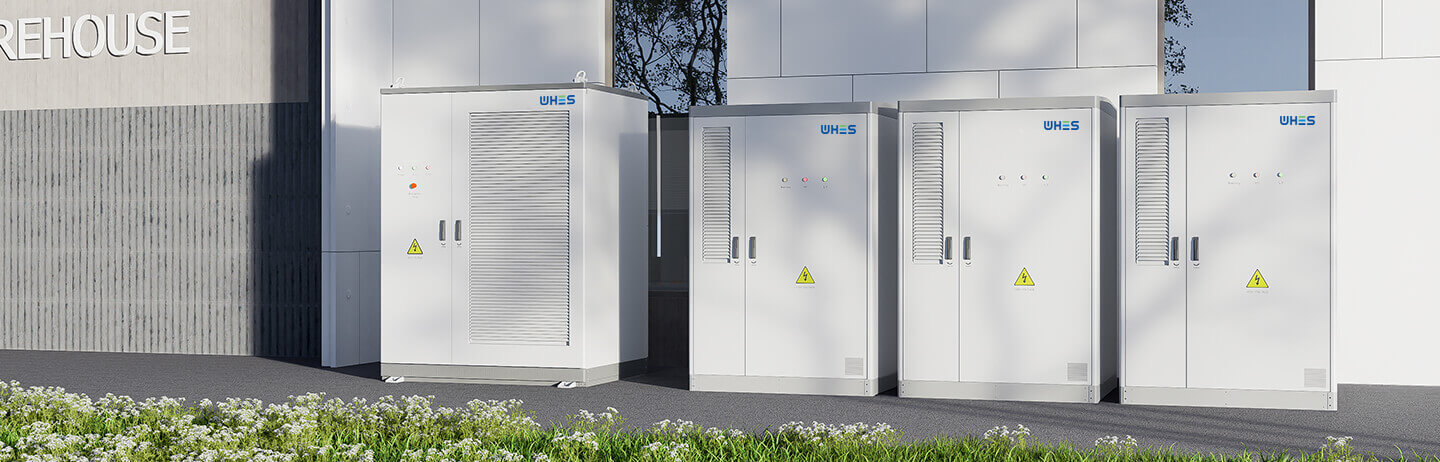
Determining the appropriate size of a commercial energy storage system is a critical decision for businesses seeking to improve energy efficiency, reduce peak demand costs, and enhance power reliability. In the expanding market of commercial battery storage, system sizing is not a one-size-fits-all approach; it requires a detailed analysis of energy consumption patterns, operational load profiles, and future expansion plans. For companies evaluating commercial battery storage solutions, selecting the right capacity directly impacts both financial performance and system effectiveness. WHES, a provider of comprehensive C&I energy storage solutions, emphasizes that accurate system sizing is the foundation of long-term energy optimization.
Energy Demand Analysis and Load Profile Evaluation
The first step in sizing a commercial energy storage system is conducting a detailed analysis of the facility’s energy consumption patterns. Businesses must evaluate peak load demand, average daily usage, and critical load requirements. In commercial battery storage applications, understanding when and how energy is consumed helps determine the optimal system capacity. Industries with high peak demand charges or fluctuating operational loads often benefit from larger storage capacities to enable peak shaving and load shifting. WHES integrates its WHES OS smart energy management system with CATL battery modules to provide precise energy analytics, helping businesses design appropriately sized commercial battery storage solutions tailored to their operational needs.
Application Scenarios and Scalability Requirements
Different industries require different configurations of a commercial energy storage system depending on operational complexity and future scalability needs. For example, manufacturing facilities may prioritize high-capacity systems for continuous production support, while commercial buildings may focus on energy cost optimization. Leading commercial battery storage solutions must also allow for modular expansion to accommodate future energy demand growth. WHES addresses these requirements by offering flexible system architectures that can scale according to customer needs. Its integrated WHES OS platform ensures that system expansion does not compromise operational stability or efficiency.
System Integration and Lifecycle Support
Beyond sizing, the effectiveness of a commercial energy storage system also depends on system integration and lifecycle management. Advanced commercial battery storage solutions must work seamlessly with existing electrical infrastructure and energy management platforms. WHES provides end-to-end support, from pre-sales system design and delivery to installation, maintenance, and after-sales service. This comprehensive approach ensures that businesses not only select the right system size but also maintain long-term operational reliability and performance.
Strategic Sizing for Long-Term Energy Efficiency
In conclusion, selecting the correct size of a commercial energy storage system requires a combination of load analysis, application assessment, and scalability planning. For companies investing in commercial battery storage, accurate system sizing is essential to maximize return on investment and operational efficiency. WHES, through its integrated WHES OS platform and partnership with CATL, delivers tailored solutions that help businesses optimize energy usage while maintaining flexibility for future growth. As energy demands evolve, properly sized commercial battery storage systems will remain a key component of efficient and resilient energy strategies.
