An indoor slide park is a building first and an attraction second. Ceiling height, structure, ventilation, and water systems must be planned together with the slides they will house, which is why indoor projects need more coordination between the manufacturer and the building team than outdoor ones.
As a water park manufacturer, Jinchao approaches this changing market through facility planning, attraction selection, and project-specific engineering rather than treating every aquatic venue as the same type of development.
Plan the Building Around the Attractions
Slide towers set the minimum ceiling height and column positions, so attraction selection should happen before the building design is fixed. Starting heights, plan dimensions, and landing pool sizes give the architect the data needed to place structure and services correctly.
Air and moisture need early attention. Indoor halls carry heat, humidity, and chemical vapors from the pools, so ventilation, dehumidification, and corrosion-resistant materials are part of the attraction budget rather than an afterthought. Choosing finishes that tolerate constant moisture reduces maintenance later.
Access matters inside a building as well. Delivery routes for large fiberglass sections, crane access, and service paths for pumps and filters should be confirmed before walls are closed, because retrofitting them later is difficult and expensive.
Designing for Different Visitor Needs
Age range has a strong influence on how an aquatic venue should be organized. Young children generally benefit from shallow interactive environments, while older children and teenagers may seek faster movement, enclosed passages, or more visually distinctive experiences. A thoughtful Water Slide strategy therefore considers intensity, height, capacity, supervision, and proximity to other activities rather than treating every attraction as an isolated feature.
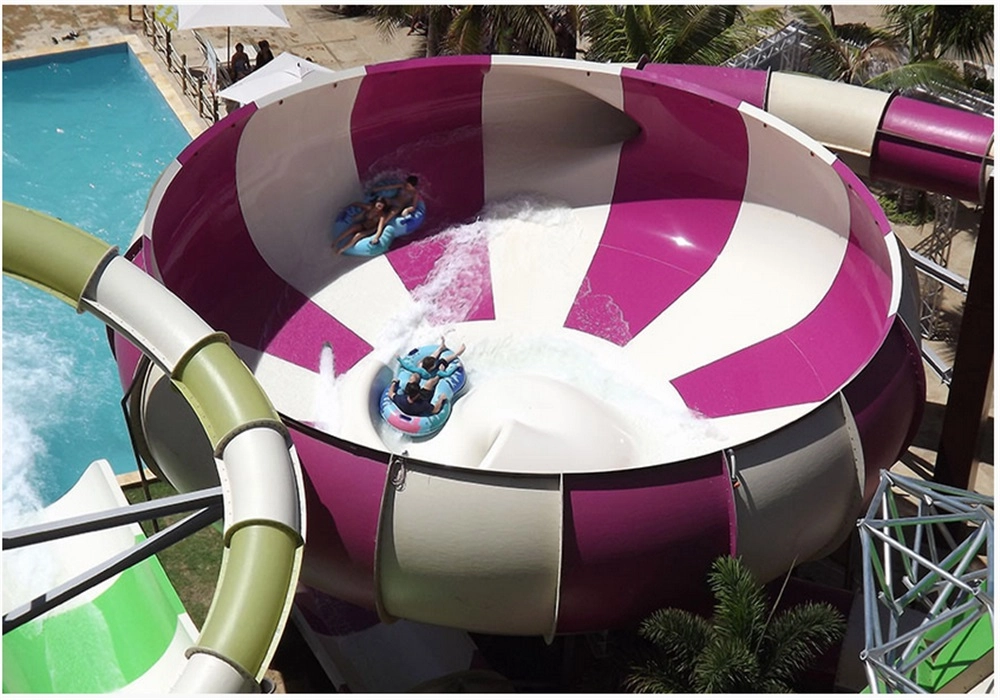
The Super Bowl Water Slide illustrates how a visually prominent attraction can contribute to spatial identity without dominating the entire project. With a starting height of 8–15 meters and capacity for 1–4 riders, its large form can function as both an attraction and a recognizable landscape element. The customizable design also allows an indoor venue to adapt the visual treatment to its broader theme, while the surrounding circulation still needs to account for queues, rider preparation, landing areas, and spectator movement.
Visitor diversity also affects indoor aquatic entertainment planning. Families may include toddlers, older children, parents, and grandparents using the same facility at different intensities. Seating with clear views, accessible routes, shaded or comfortable waiting areas, and logical connections between active and quiet zones can make the experience easier to navigate. A strong layout does not require every visitor to participate in the same activity at the same time.
Making Indoor Projects Work Across the Year
The financial logic of indoor water park feasibility extends beyond attraction purchase costs. Building size, structural requirements, HVAC demand, water treatment, staffing, utilities, maintenance, admission capacity, and local visitor patterns all influence whether a proposed venue can operate sustainably. A feasibility study should connect these variables rather than assessing equipment prices in isolation.
Operating calendars provide another useful planning lens. Year-round water attractions may create more opportunities to distribute attendance across different seasons, but extended operation also increases the importance of preventive maintenance and water-quality management. Filtration, circulation, chemical control, cleaning schedules, mechanical inspections, and replacement planning need to be considered from the earliest design stage because they affect both operating routines and long-term expenditure.
Revenue assumptions should be tested against realistic visitor behavior rather than optimistic peak-day attendance. Indoor water park development may benefit from multiple revenue streams, such as admissions, memberships, birthday packages, food and beverage, retail, private events, or partnerships with nearby hospitality businesses. The right combination depends on local demand, available space, competitive offerings, and the expected length of visitor stays.
Creating a Flexible Family Destination
A successful indoor family entertainment environment usually depends on how well different activities support one another. Water play can be positioned as the central experience while dry attractions, dining, lounges, party rooms, and retail services provide reasons to extend the visit. Such integration can also help distribute people throughout the building, reducing pressure on a single attraction during busy periods.
Operational flexibility becomes especially useful when attendance changes throughout the day. Indoor aquatic entertainment areas can be organized with different activity zones, allowing staff to manage capacity, maintenance access, and programming without disrupting the entire facility. Clear boundaries between wet and dry areas are also valuable for housekeeping, flooring selection, drainage, and guest movement.
Before construction begins, indoor water park feasibility should be tested against measurable assumptions: projected attendance, available floor area, attraction throughput, utility requirements, staffing levels, maintenance intervals, and seasonal demand. A water park manufacturer can contribute technical information during this stage, but the final planning process also needs input from architects, engineers, operators, local authorities, and financial teams. This broader evaluation helps transform an attractive concept into a facility that can function under everyday operating conditions.
Conclusion
Indoor slide parks work best when the building, the attractions, and the water systems are planned as one project. Thoughtful Water Slide placement, realistic capacity figures, and early coordination with the building team give an enclosed venue a stronger base for year-round operation.
Meanwhile, year-round water attractions give enclosed venues a basis for broader programming, while indoor family entertainment can connect aquatic play with complementary leisure activities. With project scope, operating demands, and visitor behavior considered together, Jinchao can be positioned within a development process that treats indoor aquatic spaces as long-term recreational destinations rather than oversized seasonal play areas.
