Energy storage systems are increasingly being designed as modular power platforms rather than isolated battery installations. Existing power conversion systems (PCS) and energy management systems (EMS) may need to accommodate different battery voltages, photovoltaic inputs, EV charging loads, or additional storage capacity without replacing the entire electrical architecture. A bidirectional DC-DC converter can provide this interface between DC sources and a common DC bus while allowing the existing PCS and EMS to retain their core functions.
What Are Bidirectional DC-DC Converters for Energy Storage Systems?
A bidirectional DC-DC converter controls power flow in both directions between two DC voltage levels. In an energy storage system, it can regulate energy moving from a DC bus to a battery during charging and from the battery back to the bus during discharge.
This function is particularly useful when the battery voltage does not directly match the DC bus voltage. Texas Instruments describes bidirectional DC-DC conversion as an important part of DC-coupled energy storage architectures, where the converter manages battery charging and discharging.
For existing PCS installations, this means a battery can potentially be integrated without redesigning the complete DC bus or replacing the AC/DC conversion stage. The DC-DC converter effectively becomes an additional controllable interface between the battery and the established power-conversion architecture.
What Are the Three Types of DC/DC Converters?
When engineers ask What are the three types of DC/DC converters?, the basic non-isolated categories are buck, boost, and buck-boost converters. Infineon identifies these three common switching-regulator configurations according to whether the output voltage is stepped down, stepped up, or capable of operating above or below the input voltage.
A buck converter reduces voltage, while a boost converter increases it. A buck-boost arrangement can accommodate voltage conversion in both directions around a broader operating range.
Energy storage applications can require more specialized bidirectional topologies. For example, isolated dual-active-bridge (DAB) converters are used where galvanic isolation, bidirectional operation, high power density, and a significant voltage-conversion ratio are required.
Therefore, the “three types” provide a useful basic classification, but project engineers should examine the actual topology, isolation requirements, switching strategy, and power level when selecting an industrial converter.
Why Add DC-DC Conversion to an Existing PCS?
An existing PCS is typically designed around a particular battery-voltage range and DC-bus architecture. Battery chemistry, series-cell configuration, state of charge, and system expansion can create voltage requirements that do not perfectly match the installed PCS.
Adding a bidirectional DC-DC stage can provide voltage decoupling between the battery and the common DC bus. This can make it easier to integrate batteries with different voltage characteristics while keeping the existing PCS responsible for DC/AC conversion and grid interaction.
The same principle is demonstrated in bidirectional converter reference designs, where one power stage can operate in buck mode for battery charging and boost mode for transferring stored energy back toward a DC load or bus.
For system integrators, this architecture can therefore provide a pathway for upgrading or extending an existing ESS without treating every new battery configuration as a complete PCS replacement project.
Coordinating the Converter With the EMS
Electrical integration is only one part of the process. The converter also needs to work within the site’s control hierarchy.
The EMS normally determines higher-level objectives such as charge and discharge scheduling, energy arbitrage, renewable-energy utilization, peak management, and battery operating limits. The PCS manages power conversion between the DC and AC sides, while the DC-DC converter regulates the battery-side operating point.
Clear control boundaries are essential. The EMS should not issue commands that conflict with battery voltage, current, temperature, or state-of-charge limits. Similarly, the DC-DC controller needs local protection and regulation functions so that it can respond rapidly to electrical changes without waiting for a higher-level EMS command.
This layered approach allows the EMS to concentrate on energy management while the converter handles fast electrical control.
Using MPPT for PV-Coupled Storage
PV-coupled systems create another application for bidirectional DC-DC conversion. Solar PV output varies with irradiance, temperature, and operating conditions, so maximum power point tracking (MPPT) can be used to identify the PV operating point that provides the maximum available power.
Texas Instruments demonstrates a bidirectional DC-DC design that operates as a synchronous buck converter with MPPT control for charging a battery from a solar source.
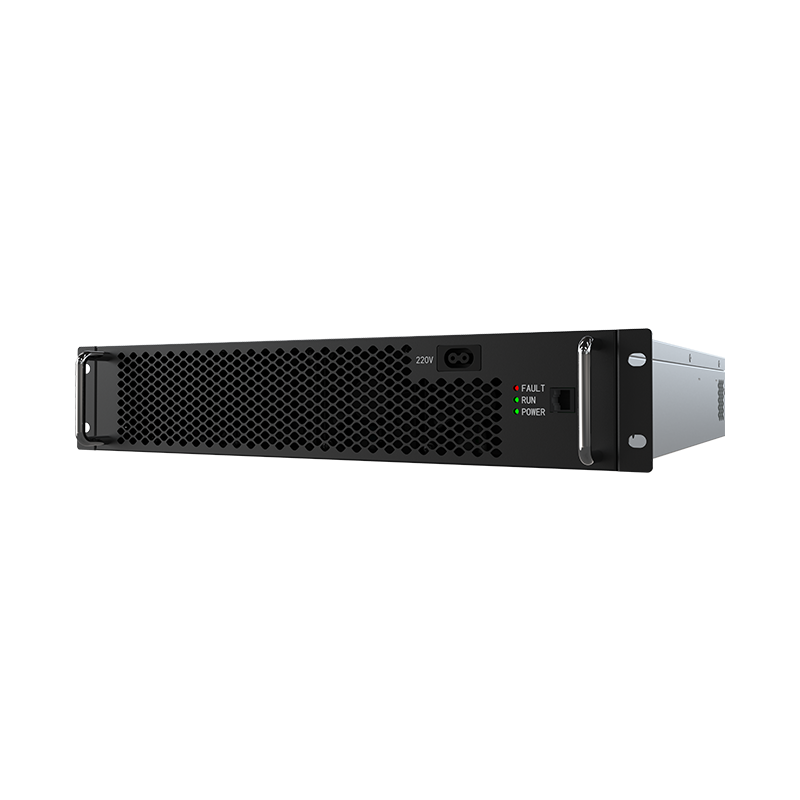
Enjoypowers‘ DCDC platform is designed around a similar concept for PV-coupled storage. Its published product description identifies a bidirectional DC-DC converter with built-in MPPT for PV, battery, and EV-charging applications. The system connects the battery to a common DC bus and can operate in battery or PV modes through firmware control.
The platform is specified for operation up to 1000 Vdc and supports up to 16 units in parallel, providing a modular approach when greater conversion capacity is required.
Designing for Parallel Operation
Parallel operation can be important when an existing system needs additional capacity without replacing a complete power-conversion block. Multiple converter units can share the DC-side workload while maintaining coordinated control.
However, parallel operation requires more than simply connecting several converters. Engineers need to consider current sharing, protection coordination, communication, startup sequencing, fault handling, and DC-bus stability.
The control system should also define how individual converter units respond to changing battery conditions and how the system behaves if one unit becomes unavailable. These requirements should be established during system integration rather than after equipment installation.
Protecting the Existing PCS Architecture
A new DC-DC converter should complement the existing PCS rather than introduce uncontrolled interactions. Engineers should evaluate DC-bus voltage limits, transient behavior, current ripple, switching frequency, protection thresholds, and communication interfaces.
Battery-side protection also deserves attention. Overcurrent, overvoltage, insulation faults, temperature limits, and abnormal operating conditions need to be incorporated into the overall protection strategy.
For systems using isolated DC-DC architectures, the topology can also provide galvanic isolation between voltage domains. TI notes that isolated bidirectional DC-DC conversion can be required in some energy storage configurations where a low-voltage battery is connected to a substantially higher-voltage DC bus.
Creating a Flexible Energy Storage Upgrade Path
The value of a bidirectional DC-DC converter is ultimately its ability to connect different DC voltage domains while maintaining controlled two-way energy flow. For existing PCS and EMS systems, this can provide greater flexibility for battery replacement, PV coupling, EV charging, or capacity expansion.
Understanding what bidirectional DC-DC converters for energy storage systems are and the three types of DC/DC converters can help engineers make better decisions when integrating these devices into existing energy storage architectures. Battery characteristics, DC-bus requirements, converter topology, EMS commands, protection, communication, and parallel operation must all be coordinated. Enjoypowers’ 1000 Vdc bidirectional DCDC platform illustrates how an integrated converter can serve as a flexible interface for PV, batteries, and EV charging while fitting into a broader energy storage architecture.
