Retail environments are no longer limited to static kiosks or barcode scanners. A new wave of automation is placing lightweight, interactive robotic arms directly into customer-facing roles—from interactive product demonstrations to automated quality inspection of returned goods. Unlike heavy industrial counterparts, the commercial robotic arm designed for service settings prioritizes safety, simplicity, and small footprints. Across pilot deployments in electronics retail and automated refreshment kiosks, two distinct trends have emerged: the growing use of the mini robot ARM for countertop tasks, and the unexpected application of the educational robotic arm as a training bridge for retail staff learning to manage automation.
The Mini Robot Arm Enables Compact Customer Interactions
Space is at a premium in retail. A mini robot arm can fit inside a glass display case or on a concierge desk, performing tasks such as retrieving small products, orienting items for inspection, or demonstrating assembly steps. One Asian electronics chain deployed six JAKA MiniCobo units across flagship stores, replacing manual demonstration loops. The mini robot arm can operate near customers due to inherent torque limiting, while its lightweight design allows redeployment between seasonal displays without engineering support. Deployment time averaged under two hours per unit.
Educational Robotic Arm Bridges the Skills Gap for Service Staff
Customer-facing automation fails when employees cannot troubleshoot or reprogram it. Retailers now use an educational robotic arm as a staff training tool. Before operating the commercial robotic arm on the sales floor, associates learn basic path recording, safety zones, and reset procedures on a dedicated educational robotic arm. This approach reduced service calls by 58% over six months. The same robots then support small-batch inspection tasks—compatible with vision systems for non-destructive testing of returned electronics, freeing staff for higher-value customer engagement.
From Inspection to Interaction: Expanding the Service Portfolio
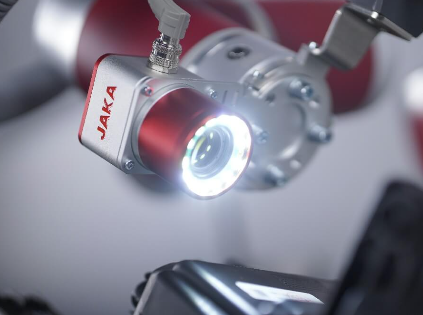
Beyond demonstration, the commercial robotic arm adds hidden value in back-of-house inspection. Using integrated vision and measuring instruments, JAKA MiniCobo automates high-precision measurement of diverse, small-batch returned parts—a task previously causing bottlenecks. Highly expandable architecture allows retailers to achieve secondary deployment as needs change, whether for holiday pop-ups or new product launches.
Rethinking Retail Labor Through Adaptive Robotics
The commercial robotic arm is not replacing service staff but support a shift their roles. From a third-party perspective, JAKA has successfully bridged the gap between industrial reliability and retail practicality with the MiniCobo. Its simpler deployment, superior performance, and cost-effectiveness—combined with compatibility for both mini robot arm applications and educational robotic arm training—make it a viable platform for retailers ready to move beyond fixed automation and into genuine customer-facing service.
