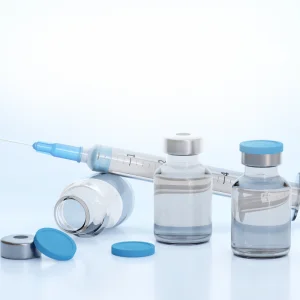
Translating laboratory discoveries into scalable clinical assets requires a thorough understanding of microbial fermentation dynamics and downstream purification science. Contemporary biotech pipelines frequently rely on bacterial and yeast systems to manufacture therapeutic proteins, hormones, and complex antigens efficiently. Optimizing these biological workflows involves careful evaluation of host compatibility, genetic stability, and scalable biomanufacturing parameters. Specialized organizations such as Yaohai Bio-Pharma provide comprehensive technical capabilities that illustrate how modern microbial protein production supports diverse clinical modalities from early-stage development to commercial-scale manufacturing.
Key Attributes of Therapeutic Peptides and Hormones
Therapeutic peptides and metabolic hormones require precise structural folding and high purity profiles to function effectively within clinical applications. Manufacturing targets such as recombinant insulins, growth hormones, and GLP-1 analogues demand sophisticated fermentation and protein refolding technologies to prevent aggregation. Bacterial expression hosts often accumulate these molecules as inclusion bodies, necessitating specialized solubilization and refolding protocols prior to final chromatography.
Platform capabilities must address the unique physical characteristics of each hormone modality to maintain biological activity. Managing high-yield fermentation processes requires strict control over nutrient feeding strategies and dissolved oxygen levels. Facilities that integrate advanced purification technologies achieve high product purity while preserving the structural integrity of sensitive peptide chains. Furthermore, Yaohai Bio-Pharma utilizes tailored expression and purification platforms to facilitate the scalable manufacture of metabolic regulators and recombinant hormones.
Manufacturing Vaccines And Complex Recombinant Antigens
Vaccine development presents unique biological hurdles due to the intricate structures of viral antigens and virus-like particles. Producing complex macromolecular assemblies requires robust yeast expression systems capable of folding multi-subunit structures correctly. Different vaccine modalities demand highly distinct developmental approaches, ranging from soluble subunit expression to particulate capsid assembly. Overcoming manufacturing bottlenecks in this domain depends heavily on scalable fermentation frameworks.
Yeast expression platforms offer significant advantages for producing complex recombinant antigens used in modern immunization strategies. These systems provide post-translational modification pathways that closely mimic eukaryotic cellular environments. Optimizing fermentation scale helps researchers achieve high volumetric yields without compromising antigenicity. Structured biomanufacturing environments allow developers to transition intricate vaccine candidates smoothly from pilot scales into clinical evaluation suites.
Upstream Fermentation Optimization and Process Scalability Design
Precise regulation of cultivation environmental factors is essential for upstream processing to boost cell productivity and stabilize target protein quality. Core bioreactor operating conditions including dissolved oxygen, pH value and temperature curve exert direct impacts on the biomass concentration at harvest. Nutrient supplementation plans need flexible real-time adjustments matching metabolic changes of host cells in high-density fermentation, while continuous real-time monitoring of all process parameters effectively curbs inclusion body generation and elevates the yield of target biomolecules.
Large-scale industrial fermentation relies on mature engineering control systems to sustain aseptic production and consistent quality between batches. Scale-up transfer from laboratory bioreactors calls for delicate regulation of mass transfer efficiency and fluid mixing performance. Professional R&D teams deploy dedicated analytical equipment to monitor cellular metabolic markers throughout the whole fermentation process. As a comprehensive CRDMO provider, Yaohai Bio-Pharma leverages integrated service strengths to refine upstream technological parameters applicable to multiple microbial expression platforms.
Purification Process Robustness – Verifying Performance Under Real‑World Conditions
A supplier’s downstream purification capability should be evaluated not merely by the equipment they own, but by the depth of process characterization supporting each purification step. Qualified suppliers conduct design‑of‑experiment studies to define the operational ranges for each chromatography and filtration step, identifying how buffer pH, conductivity, flow rate, and load density affect yield and purity outcomes. These systematic investigations establish a design space within which the process remains robust, ensuring that routine manufacturing variations do not compromise product quality. Procurement teams should review these characterization reports to assess whether the supplier truly understands the boundaries of their own process.
Equally revealing is the supplier’s approach to process performance qualification (PPQ) and ongoing verification. Suppliers that routinely track critical performance indicators—including step recovery yields, impurity clearance factors, and column lifetime—demonstrate a commitment to continuous process monitoring. When process deviations occur, the depth of root‑cause investigation and the speed of corrective implementation reflect the maturity of the supplier’s quality systems.Downstream processing represents a critical phase in isolating target biological molecules from host cell proteins, nucleic acids, and endotoxins. Complex chromatographic techniques, including affinity, ion-exchange, and size-exclusion chromatography, require precise buffer optimization to preserve higher-order structure. Scalable filtration units must handle large harvest volumes while maintaining high product recovery rates. Integrating multi-step purification schemes directly into the manufacturing layout prevents structural degradation and reduces total processing time.
Cross-Market GMP Compliance Solutions for Global Biologic Registration
Biotech enterprises aiming to launch products in multiple regions face fragmented regulatory rules across different jurisdictions. Uniform compliance execution becomes a key barrier delaying overseas marketing approvals. Authorized production sites need consistent alignment with cGMP rules issued by NMPA, FDA and EMA. Complete batch documentation and full material traceability act as core evidence to pass official inspections, covering every link from raw material receiving to finished product release.
Yaohai Bio-Pharma builds fully standardized quality management systems covering equipment qualification, staff GMP training and round-the-clock cleanroom environmental monitoring. Independent QA departments handle abnormal deviation analysis and launch corrective and preventive measures in a timely manner. Rich audit records accumulated by Yaohai Bio-Pharma shorten the review cycle of CMC dossiers greatly. The mature compliance system safeguards patient safety and creates smooth commercial access routes for biotherapeutics worldwide.
Intellectual Property Protection and Data Integrity Assurance
Safeguarding proprietary cell lines, expression vectors, and process parameters requires stringent physical and digital security architectures. External manufacturing partners must implement isolated network environments and restricted access zones to protect confidential client assets. Secure data management systems prevent unauthorized alterations and maintain complete audit trails for all analytical records. Comprehensive non-disclosure agreements reinforce technical safeguards to ensure absolute client ownership.
Chain of custody tracking protocols monitor every physical sample and digital file throughout the contract manufacturing lifecycle. Dedicated storage repositories equipped with environmental alarms and backup power supplies secure master and working cell banks safely. Maintaining strict information security protocols prevents intellectual property leakage and preserves competitive advantages for drug developers. Robust data integrity measures guarantee that all technical documentation remains reliable for regulatory submissions. Furthermore, Yaohai Bio-Pharma implements strict safeguards to secure sensitive client projects involving complex microbial protein production.
Conclusion
Successful microbial protein production relies on entails rigorous assessment of technical specifications, expression host compatibility and quality control workflows. Focusing on scientific openness, stringent analytical verification and scalable production infrastructure supports researchers in advancing therapeutic pipelines. Partnerships with expert microbial development specialists facilitate seamless clinical translation, ensuring key molecular innovations reach global healthcare markets more reliably.
