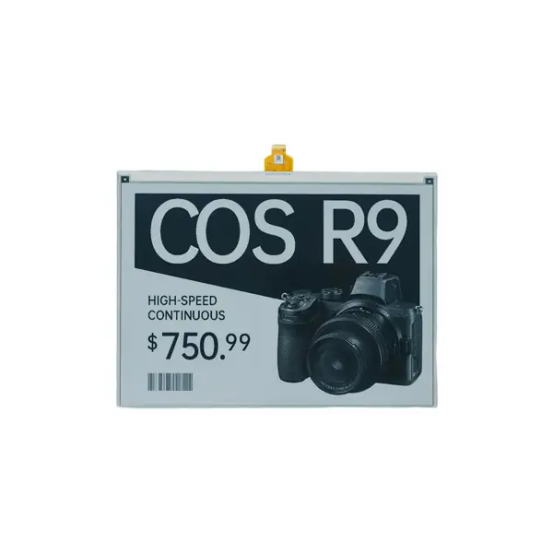
A display should be chosen according to the information it must present, the power limits of the device, and the viewing conditions of the final product. A 13.3inch e ink display is most suitable when information remains visible for long periods and does not require video-speed refresh.
SEEKINK’s official 13.3-inch ePaper module information gives project designers a specific reference: 960 x 680 resolution, 88 DPI, active area of about 275 x 195 mm, glass active matrix TFT structure, 3.0V operation, built-in T-con, external dimensions around 286.32 x 212.26 mm, and options for black-and-white or added red and yellow color display.
A 13.3in epaper display module can therefore fit projects that need larger static information, such as status boards, schedules, labels, instructions, equipment panels, or public information surfaces. The choice is strongest when the project values readability and low-power retention.
At the planning stage, teams should also compare how often content changes, how far users stand from the screen, and whether the display will be installed indoors or inside another device.
Match the Screen Area to the Message
The first reason to choose a 13.3inch e ink display is the balance between size and readable information. Smaller modules are suitable for badges or shelf labels, but they may not show diagrams, multi-line instructions, or schedule blocks comfortably. The active area of about 275 x 195 mm gives designers more space for layouts that include headings, values, icons, and supporting text.
SEEKINK’s module is not described as a video display; it is better understood as a static information surface. That makes it relevant to products where users check information briefly and expect it to remain available without continuous lighting. Designers should think about viewing distance, character size, contrast, and whether the content will be read up close or from several steps away.
When the message needs more visual structure than a small tag can provide, this module size becomes practical. The larger surface also gives designers room to create hierarchy, separating urgent information from supporting details without crowding the layout.
Consider Power, Color, and Device Architecture
A 13.3in epaper display module should also be considered when the product has strict power requirements. E-paper is useful for static content because it can hold an image without the same energy pattern as a constantly lit screen. SEEKINK lists 3.0V operation and a built-in T-con, both of which are relevant to integration planning.
Color options also matter. A black-and-white version may be suitable for clear labels, instructions, and simple data, while added red and yellow can highlight warnings, categories, or priority information. The 88 DPI resolution should be matched with the intended content; fine photographic display is not the main purpose, while clean text and simple graphics are more realistic.
Designers should also check enclosure dimensions, interface requirements, refresh needs, and how often content changes. The module should be chosen as part of the whole device structure, not as an isolated screen. Power planning should include the controller, refresh frequency, and any wireless or sensor functions connected to the final product, because the module is only one part of the energy profile.
Use Cases That Benefit from Static Readability
The third reason to choose this display size is its fit with products that present stable information. A 13.3inch e ink display can support equipment labels, digital signage, transportation notes, warehouse panels, office schedules, instructional boards, or embedded information devices.
SEEKINK’s wider e-paper solution areas include workplace, transportation, advertising, consumer electronics, and other display applications, which helps place the module within real use cases.
The large format gives more room for readable layouts, while the paper-like display behavior suits information that should remain visible without drawing excessive attention. The product designer still needs to test refresh time, color needs, and environmental conditions before committing to a final design.
A successful project will use the module where its strengths are natural: persistent text, simple graphics, low-power viewing, and a quiet visual surface. A prototype should therefore be viewed with real content rather than placeholder text, since layout density can change the perceived value of the display size.
A 13.3-inch e-paper screen is not the answer for every display project, but it is a practical option for larger static information. SEEKINK’s 13.3in epaper display module offers measurable specifications that help designers evaluate fit before development moves too far.
A 13.3inch e ink display should be chosen when the project needs a larger readable area, modest power behavior, simple color emphasis, and a paper-like display character.
By matching the module to the message, enclosure, interface, and update rhythm, a project team can use e-paper where it provides clear functional value. This kind of review helps prevent a mismatch between the screen’s measured specifications and the practical expectations of the people who will read the finished device. Designers should also consider the viewing environment.
A workplace panel, warehouse label, and public schedule may all use the same display size, but each requires different contrast, mounting height, enclosure protection, and update frequency. SEEKINK provides a concrete module reference when project teams compare static visibility, electrical limits, and installation requirements.
