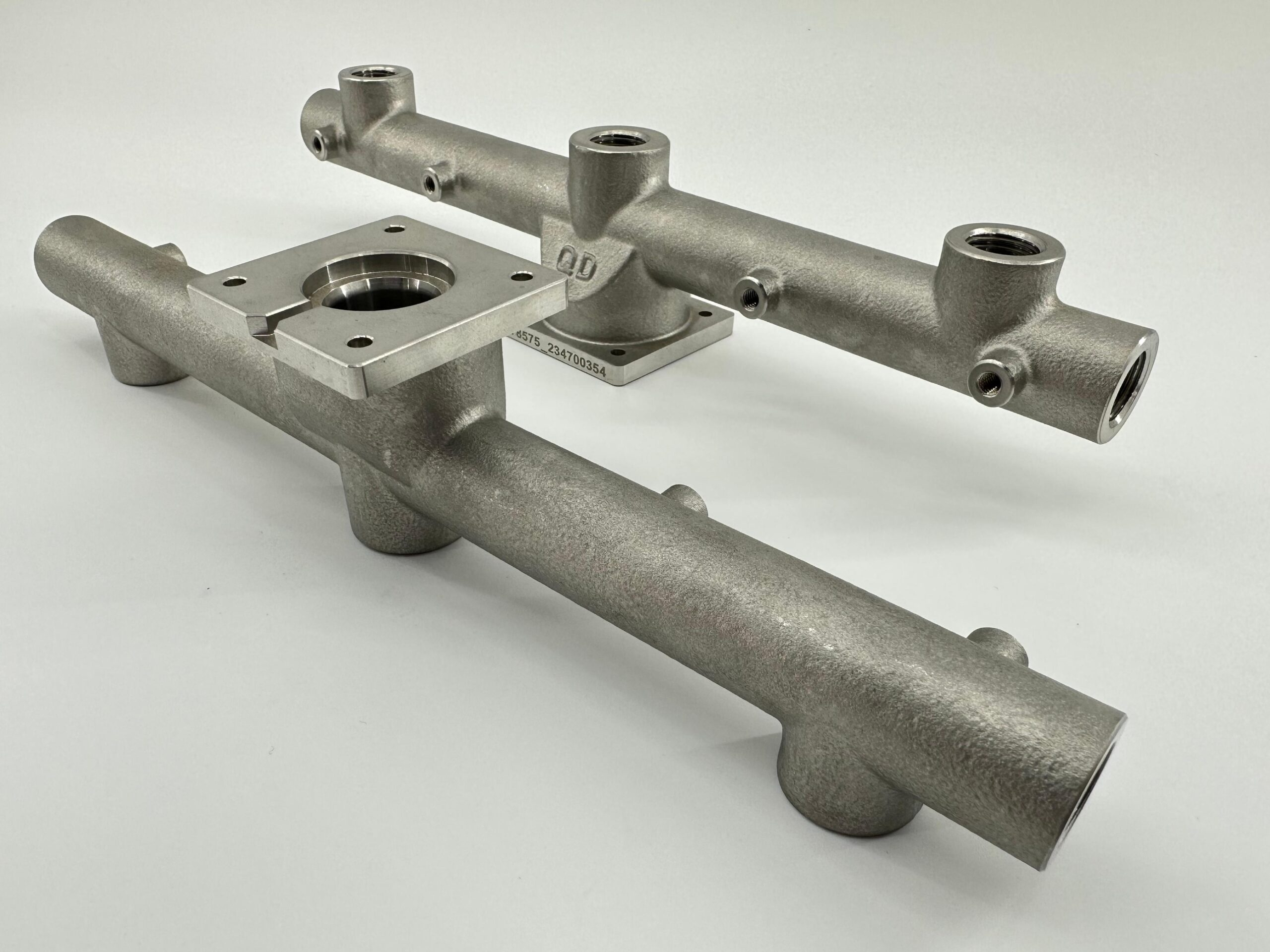
In high-density cooling systems, flow uniformity is critical because uneven coolant distribution can lead to temperature fluctuations and unstable equipment performance. When engineers evaluate how a liquid cooling manifold influences fluid behavior, they often focus on how structural channels guide circulation through multiple branches. A manifold plays a central role in routing coolant to different modules without causing excessive pressure drops. By establishing controlled pathways, these components help stabilize overall thermal conditions and support predictable operation in complex assemblies.
A liquid cooling manifold becomes even more important when equipment contains densely arranged heat-generating parts. Without organized flow routing, certain areas may receive insufficient coolant while others receive more than necessary. This imbalance can reduce thermal efficiency and increase service demands. Because a manifold can centralize fluid entry and exit points, it simplifies the process of balancing flow rates across the entire system. This is why in many engineering setups, they integrate manifolds early in the thermal design stage to help maintain reliability over long operation cycles.
How a Manifold Supports Consistent Flow Distribution
Flow distribution is often affected by the geometry and internal layout of cooling components. When designers incorporate a liquid cooling manifold, the goal is to maintain equal or intentionally controlled coolant delivery to each branch. The manifold achieves this through its internal channels, which divide flow based on system requirements. By organizing coolant movement at the source, the component helps reduce the risk of hotspots and allows other temperature-control modules to perform as expected.
A liquid cooling manifold also contributes to stable performance by helping reduce turbulence and minimizing unnecessary flow resistance. These features matter because high-density systems usually operate under continuous or near-continuous loads. Manifolds that guide fluid smoothly between different sections can support better long-term efficiency and lower maintenance frequencies. In engineering practice, this contributes to more predictable temperature profiles, especially when the cooling system must support sensitive components or tightly packed mechanical structures.
Applying Manifolds to Real Cooling System Configurations
When applying manifold-based distribution in practical system layouts, engineers often consider installation accessibility, leak prevention, and compatibility with other modules. A manifold is essential in liquid cooling systems because it centralizes multiple fluid connections while directing coolant precisely across different pathways. This approach not only supports stable temperatures but also simplifies assembly, inspection, and service routines.
They, as a manufacturer, understand these needs when providing solutions for dense cooling systems. Dingmetal offers various manifold options—including intake configurations, exhaust versions, and fuel-rail-style designs—to match different flow requirements. Their products are developed to help customers integrate cooling structures more effectively while maintaining practical considerations such as durability, machining accuracy, and long-term reliability. With these options, engineers can select a setup that supports both cooling performance and ease of operation in complex mechanical environments.
Conclusion: Improving Flow Management with Effective Manifold Design
Consistent flow distribution is a key factor in the performance of high-density cooling systems, and a well-designed manifold plays a central role in achieving this balance. By using a liquid cooling manifold, designers can organize coolant channels, reduce flow irregularities, and support stable thermal behavior even in demanding configurations. As part of their product offerings, Dingmetal provides manifold solutions that align with real engineering requirements, making it easier for users to implement efficient and service-friendly cooling structures. With thoughtful application, these components contribute to more reliable system operation and improved long-term temperature control.
