For decades, the foundation of grid stability relied on peaker plants—natural gas or oil-fired facilities designed to fire up quickly (within minutes to hours) to meet short periods of extreme electricity demand, typically on hot summer afternoons or cold winter evenings. However, these plants are expensive to run, emit significant greenhouse gases, and sit idle for much of the year, resulting in poor efficiency.
The rise of utility scale battery storage systems (BESS) is fundamentally challenging this outdated model. Modern BESS, provided by specialized utility–scale battery storage companies like HiTHIUM, offer a faster, cheaper, cleaner, and more flexible alternative to peaker plants, ushering in a new era of grid reliability and efficiency. This shift represents a crucial financial and operational opportunity for developers and Independent Power Producers (IPPs).
Understanding the Economic and Environmental Deficiencies of Peakers
Peaker plants are designed for capacity assurance, not efficiency. Their use leads to two major problems that BESS is solving:
High Operational Cost: Peakers use expensive, non-baseload fuel (like jet fuel or natural gas) and incur high start-up costs and maintenance costs due to the stress of rapid cycling. They have a very high Levelized Cost of Energy (LCOE) compared to VRE and storage.
Environmental Impact: As fossil fuel generators, peakers contribute to carbon emissions and local air pollution, often located near population centers where the peak load occurs. The transition to BESS directly supports grid decarbonization goals.
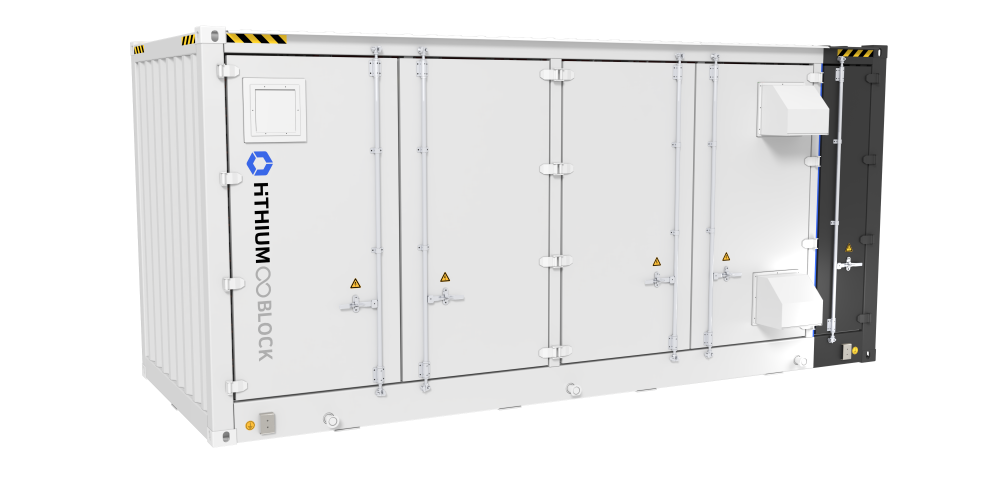
Product Spotlight: The HiTHIUM infty Block 5.016 MWh BESS
The HiTHIUM infty Block 5.016 MWh BESS is a core product designed to directly replace the capacity and fast-response function of peaker plants. This utility scale battery storage unit is housed in a standard 20-foot container, achieving high energy density (over 5 MWh) using advanced LFP prismatic cells. Crucially, the system features a proprietary liquid-cooling design that maintains an extremely tight temperature uniformity across the cells (cell temperature variation below 3 degrees Celsius). This superior thermal management is essential because, unlike a peaker plant, a BESS must be ready to respond instantly, often multiple times per day. The liquid cooling ensures consistent performance and preserves the long life of the cells, guaranteeing the asset’s financial return over its operational life.
How Utility-Scale Battery Storage Outperforms Peaker Plants
Utility–scale battery storage companies build BESS to excel in the core functions required for peak load management, offering superior performance across critical metrics:
Speed of Response (The Capacity Function)
Instantaneous Dispatch: While gas peakers take minutes to hours to ramp up to full power (spinning reserve), the HiTHIUM BESS can dispatch its full power rating in milliseconds. This instantaneous response capability is not only better for managing scheduled peak demand but is also essential for providing ancillary services like frequency regulation, a service peakers often cannot provide fast enough.
Precision Control: BESS systems can be finely controlled to dispatch exactly the amount of power needed, avoiding the “overshoot” inherent in large gas turbines. This precision reduces strain on the grid.
Cost and Efficiency (The Economic Function)
Low Operating Cost: BESS stores cheap energy—often surplus clean energy from wind or solar that would otherwise be curtailed. Once charged, the cost of dispatching the stored energy is near zero. This provides a superior economic alternative to burning high-cost fossil fuels.
Multiple Revenue Streams (Revenue Stacking): Unlike a peaker plant that only earns revenue when generating power during peak times, a utility scale battery storage asset can stack multiple services. It can provide fast frequency regulation (ancillary service) in the morning and evening and then perform energy arbitrage (peak capacity) in the late afternoon. This stacking maximizes asset utilization and dramatically improves the financial viability of the BESS project.
Environmental and Siting Benefits
Zero Emissions: BESS operates with zero local air emissions, making it a viable and preferred solution for deployment in densely populated load centers where the power is needed most. This eliminates the need for long, expensive transmission lines and avoids air quality issues.
Modular and Scalable: The BESS format, such as the containerized infty Block 5.016 MWh, is modular and can be sized precisely to meet local demand. It can be expanded incrementally as load grows, unlike a large, inflexible gas plant.
The Future: Virtual Power Plants (VPPs) and Hybrid Assets
The replacement of peakers is not just about a single BESS unit; it’s about a paradigm shift toward distributed, intelligent assets.
Hybrid Power Plants: Many new projects combine large-scale solar farms with utility scale battery storage assets to create hybrid power plants. The solar component generates the cheap fuel, and the BESS component acts as the dispatchable, peaker-replacing capacity, providing a clean, complete energy solution.
Virtual Peaker Plants: Advances in energy management systems (EMS) allow multiple BESS assets—including utility-scale systems and aggregated commercial and residential storage—to be controlled centrally, creating a Virtual Power Plant (VPP). This VPP acts as a massive, dispatchable resource that functions as a single, large peaker plant replacement, further enhancing grid flexibility and resilience. HiTHIUM’s focus on high-reliability cells ensures these virtual assets deliver power precisely when needed.
Conclusion
For developers, investing in utility scale battery storage represents a clear trajectory away from the high-cost, high-emission model of traditional peakers. By selecting advanced, high-endurance systems from specialized utility scale battery storage companies like HiTHIUM, partners can capitalize on the superior financial, environmental, and operational advantages of the battery revolution.
