For modern cities to grow, they need a digital infrastructure that can accurately model reality down to the smallest details. Old-fashioned city planning and civil engineering used two-dimensional blueprints that were hard to put together and took a lot of time to survey by hand. This led to a lot of problems, unexpected costs, and long project timelines. High-fidelity three-dimensional capture technologies are quickly changing this landscape today. The change is made possible by advanced 3D mapping software that turns complicated environmental data into digital models that can be used. This technological revolution lets city planners, architects, and engineers make full digital copies of cities, from single buildings to whole neighborhoods. The 3DeVOK ecosystem and other platforms like it are shaping the future of smart urban development by providing specialized tools for data integration and visualization. These tools make sure that infrastructure projects are planned, built, and maintained with more accuracy and efficiency than ever before.
Setting up the Digital Foundation: Collecting Data on a Large Scale
Urban mapping relies on large-scale spatial data collection using aerial LiDAR, photogrammetry, and ground-based technologies. While photogrammetry reconstructs 3D topography from overlapping aerial imagery, millimeter-accurate terrestrial scanners like 3DeVOK capture precise details of critical infrastructure, facades, and structural elements.
The core challenge lies in integrating these diverse datasets into a cohesive model. Specialized 3D mapping software resolves discrepancies between aerial point clouds, photogrammetric meshes, and terrestrial scans through advanced registration algorithms. This process creates a unified digital twin that accurately represents urban geometry, serving as the authoritative foundation for all planning and engineering applications.
Enabling Integrated Urban Modeling
Dedicated processing engines, like the 3DeVOK Mapping Software, are necessary to handle the large number and complexity of urban digitization projects. One of the main things you can do with this powerful 3D scan software for PCs is make detailed “as-built” documentation for both new and old infrastructure. This means writing down the exact location of all visible parts, such as structural components, utility lines, mechanical systems, and historical façades. This means that civil engineers need the software to be able to quickly export clean, geometrically accurate meshes to Building Information Modeling (BIM) and Geographic Information Systems (GIS).
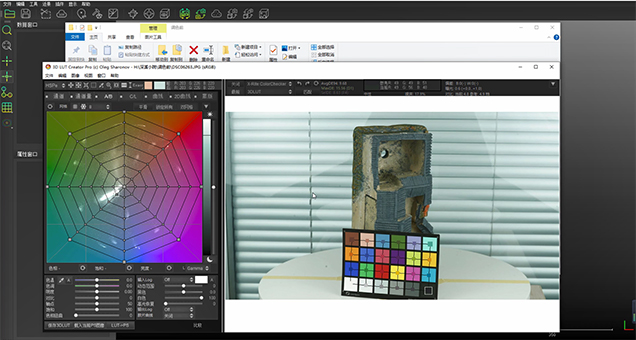
For urban visualization and decision-making, it’s important that the software can handle high-resolution textures. Aerial mapping shows general color, but the 3DeVOK platform shows more detail thanks to features like Texture Mapping Replacement. This is where high-quality pictures are smartly projected onto the large-scale mesh. This makes the images look real, which improves communication with stakeholders, accurately records the condition of materials for maintenance reports, and makes virtual reality walkthroughs for public consultation. Also, the software’s advanced alignment and data optimization tools make sure that these huge models keep their great detail without becoming too heavy for city-wide server storage and real-time viewing apps. This creates a permanent, searchable digital archive for city use.
Improving construction, finding conflicts, and managing the lifecycle
The planning and building stages of urban development are where 3D mapping has the biggest effect. Architects and engineers use the high-fidelity digital twin to find clashes by putting proposed construction plans on top of the “as-built” digital reality model. Before construction even starts, the 3D Mapping Software shows any conflicts right away. For example, a new pipe might get in the way of an existing electrical conduit. This ability to predict saves a lot of money on-site rework, delays, and material waste, which speeds up project completion times across the civil engineering spectrum.
The mapped digital model is the best for maintaining and upgrading existing buildings. 3DeVOK Mapping Software makes detailed, accurate models that can be used as a reliable reference when planning to replace an old part of a bridge or move utilities around in a crowded city corridor. Maintenance teams can do virtual inspections, measure distances exactly, and plan how to move equipment around without having to go into dangerous or hard-to-reach places. This lifecycle management method makes critical infrastructure last longer by allowing for highly targeted, proactive maintenance instead of reactive, emergency repairs. The integration features make sure that the scan data stays a living document that different software systems can access and use. These systems control everything from tracking assets to managing energy.
3D mapping is the future of smart cities.
The growth of digital infrastructure is closely tied to the growth of 3D mapping technologies. 3DeVOK Mapping Software is leading the way in this change. It connects different ways of capturing data, like high-accuracy scanning and large-scale software for photogrammetry, with the useful information that city planners need. This technology makes the idea of the Smart City possible. A Smart City is an interconnected, fully mapped urban environment where planning is predictive, construction is seamless, and infrastructure management is efficient and sustainable. It does this by providing unmatched accuracy, visual realism, and data integration capabilities. The ongoing use of professional 3D mapping software not only makes multi-million dollar public projects less risky, but it also greatly improves the speed and quality of life in modern cities.
