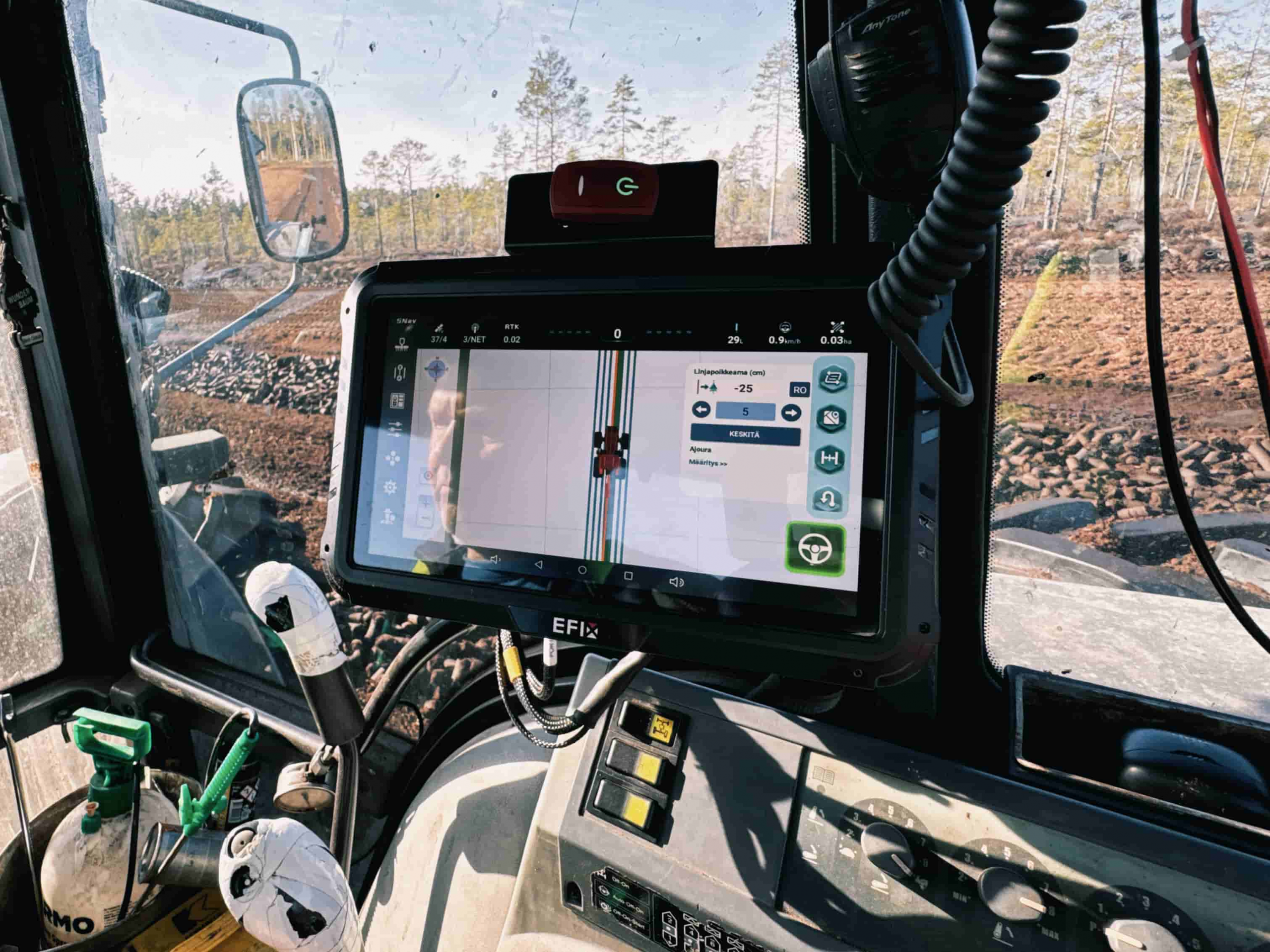
Modern agriculture increasingly relies on automation to improve operational accuracy and reduce repetitive manual work. Among these technologies, tractor autosteer systems have become an important tool for maintaining straight passes, minimizing overlap, and improving field efficiency. When comparing options available on the market, differences often appear in steering response, navigation logic, and adaptability to various field layouts. These factors influence how well an autosteer system can support consistent performance across different farming scenarios without adding unnecessary complexity for operators.
Key Functional Criteria for System Comparison
A major point of comparison among autosteer solutions is how they handle turning at field ends and irregular boundaries. Some systems focus on basic line-following, while others integrate more advanced turning strategies that allow smoother transitions between passes. Flexible turning logic helps machines maintain alignment even when working in fields with curves, headlands, or obstacles. Ease of installation and compatibility with different tractor models are also commonly evaluated, as farmers often look for systems that can be applied across multiple machines without major modifications.
Practical Adaptability in Real Farming Conditions
Adaptability becomes especially important when fields vary in shape or size. For example, EFIX offers autosteer solutions designed to support multiple automatic U-turn approaches, allowing operators to select methods that suit specific tasks. The eSteer 10 provides flexible U-turn modes such as skipping U-turn, curve U-turn, boundary U-turn, and headland U-turn. For more complex operations, the eSteer20 Max is designed to maintain adaptability across diverse farming tasks, helping tractors navigate irregular plots while keeping steering behavior consistent and predictable.
Conclusion: Evaluating Systems Beyond Basic Automation
When comparing different autosteer options on the market, it is useful to look beyond basic guidance accuracy and consider how systems perform during turns, transitions, and varied field conditions. Features such as multiple U-turn strategies and adaptable navigation logic can influence long-term usability and operational comfort. By understanding these distinctions, farmers and equipment managers can better match an autosteer solution to their specific field requirements, ensuring that automation supports practical workflows rather than complicating them.
